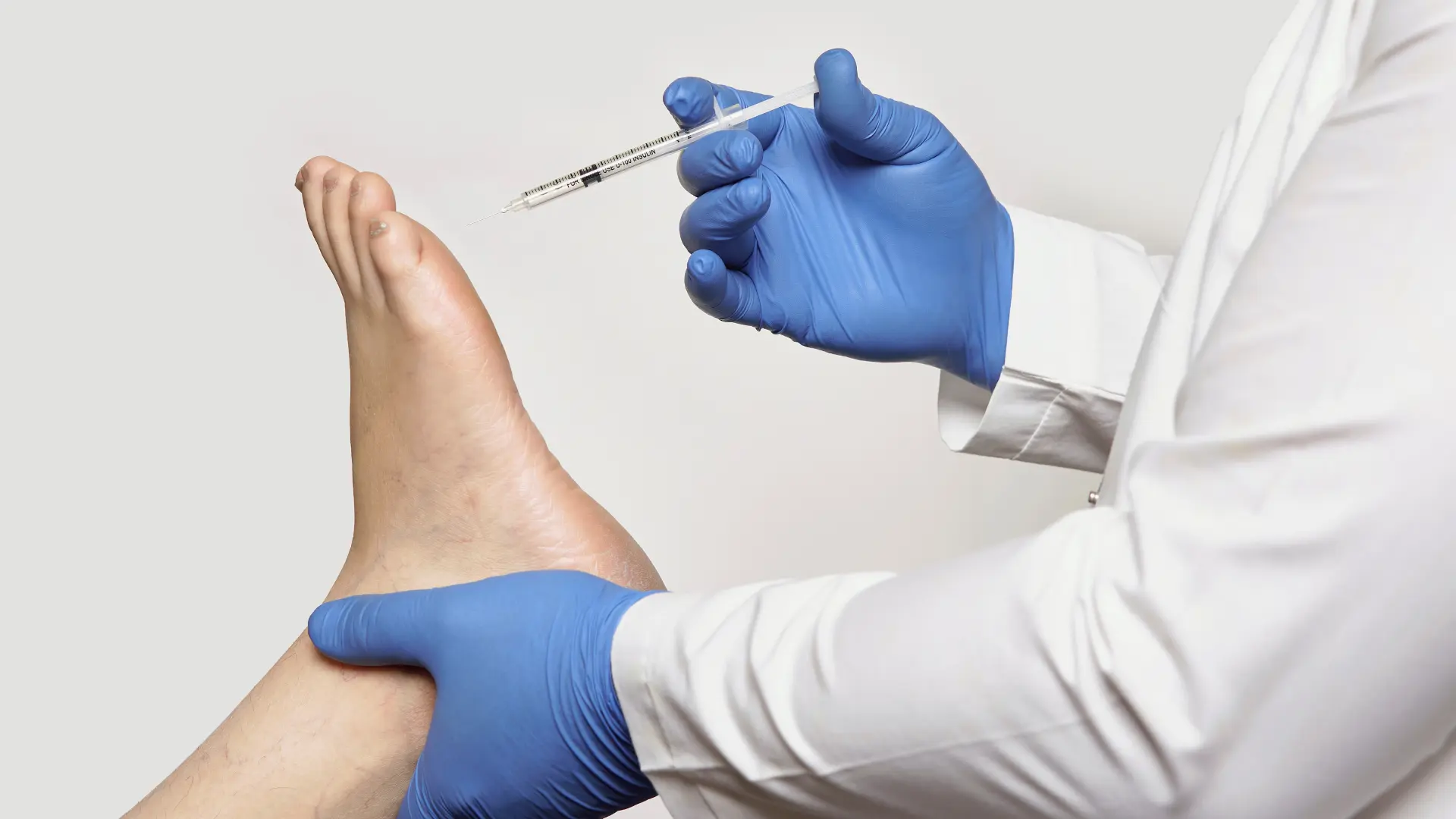
Foot and ankle pain can affect nearly every part of daily life, from taking the first steps in the morning to working, exercising, or simply standing comfortably. When basic care has not provided enough relief, patients may begin researching regenerative medicine for foot pain. The term can sound complex, but the general idea is straightforward: certain treatments use biologic materials or targeted techniques to support the body’s healing response rather than only masking symptoms.
Regenerative care is not a single product, and it is not a guaranteed cure. It is an umbrella term that can include biologic treatments such as platelet-rich plasma (PRP), which is prepared from a patient’s own blood. Southside Foot Clinic does not currently perform PRP in the office, but it remains one example of the broader regenerative medicine category. The American Academy of Orthopaedic Surgeons’ overview of orthobiologics explains that these therapies are being studied for their potential to relieve symptoms and support healing in selected musculoskeletal conditions. The evidence, however, varies by treatment and diagnosis.
How Regenerative Foot Treatment May Work
Healthy healing depends on a coordinated biological response. Platelets, proteins, cells, and signaling molecules all play different roles in repairing tissue. PRP is one well-known example: a small blood sample is processed to concentrate platelets before the preparation is placed at the treatment site. Platelets contain growth factors involved in healing, although researchers are still determining which conditions respond best and which preparation methods are most effective.
In foot and ankle care, regenerative treatments may be discussed for certain chronic tendon, ligament, fascia, joint, or soft-tissue concerns. Examples may include ongoing heel pain, plantar fascia problems, or tendon symptoms that have not improved as expected. Because pain in the same area can come from several different conditions, a precise diagnosis matters before any treatment is recommended.
Patients with recurring heel pain can review Southside Foot Clinic’s information about heel spurs and plantar fasciitis, while those with pain along the back of the ankle can learn more about Achilles tendon conditions. These pages illustrate why treatment should be based on the affected structure rather than the location of pain alone.
How It Differs from Rest, Medication, Orthotics, and Surgery
Regenerative medicine does not automatically replace conventional care. Instead, it may occupy a different place in the treatment process.
Rest and activity modification reduce stress on irritated tissue and give it time to recover. They are often among the first steps, but prolonged rest alone may not address mechanics or chronic tissue changes.
Medication may reduce pain or inflammation. It can make symptoms more manageable, but it does not necessarily correct the condition causing them.
Custom orthotics and supportive footwear redistribute pressure, improve support, and address mechanical forces that contribute to some foot problems. They may be used alone or alongside another treatment.
Surgery can repair, realign, release, or reconstruct tissue when a structural problem or advanced condition requires it. Regenerative care is generally less invasive, but it is not appropriate for every injury and cannot correct every structural issue.
The best plan may combine several approaches. For example, an injection intended to support tissue recovery may be less useful if the foot continues to experience the same uncorrected load or movement pattern. That is why foot and ankle regenerative care is typically considered as one part of a broader plan rather than a stand-alone shortcut.
Who May Be Considered for Regenerative Care?
A possible candidate may have a confirmed musculoskeletal diagnosis, persistent symptoms despite appropriate conservative care, and treatment goals that align with the expected recovery process. A consultation should review how long the pain has been present, previous treatments, activity demands, medical history, medications, and any factors that could affect healing.
The examination may include an assessment of strength, alignment, motion, tenderness, footwear, and walking mechanics. Imaging may be considered when it would change the diagnosis or treatment plan. Patients should also receive a clear explanation of the proposed treatment, its regulatory status, expected costs, realistic benefits, possible risks, and alternatives.
Benefits, Limitations, and Realistic Expectations
Depending on the therapy, regenerative treatment may be performed without open surgery or general anesthesia. Some approaches use a patient’s own biologic material, while others use targeted techniques intended to support the local healing environment. These features can make regenerative care appealing to people looking for a nonsurgical foot pain treatment, but the specific option still needs to match the diagnosis.
It is equally important to understand the limits. Improvement may take weeks or months rather than occurring immediately, and evidence is not uniform across every condition or treatment. The AAOS review of PRP notes that outcomes can depend on the area treated, the patient’s health, whether the injury is acute or chronic, and how the PRP is prepared. Because PRP is not currently performed at Southside Foot Clinic, a consultation will focus on the options available for the patient’s diagnosis and whether another treatment or referral may be more appropriate.
Patients should also be cautious about broad claims involving “stem cells,” exosomes, or products promoted as cures for many unrelated conditions. The U.S. Food and Drug Administration’s consumer alert on regenerative medicine products encourages patients to ask whether a product is FDA-approved or being used within an authorized clinical trial.
Regenerative Care Is Not the Only Advanced Nonsurgical Option
Some chronic foot and ankle conditions may be better suited to a different minimally invasive approach. Southside Foot Clinic also provides information about Tenex Health TX® for selected chronic tendon and soft-tissue conditions. Tenex is not a regenerative injection. It uses ultrasonic energy to target and remove damaged tissue through a small percutaneous opening. The right option depends on the diagnosis, tissue condition, previous care, and individual goals.
Discuss Regenerative Medicine in Greenwood, IN
If foot or ankle pain continues to limit your routine, a professional evaluation can clarify what is causing it and whether regenerative medicine belongs in your treatment plan. Southside Foot Clinic serves Greenwood and the greater Indianapolis area with individualized foot and ankle care focused on function, comfort, and informed decision-making. Ready to discuss your options? Request an appointment with Southside Foot Clinic.